Track 9. Machine Learning, Privacy Computing and Federated Learning
▶ Topics | Submit Online: https://www.easychair.org/conferences/?conf=prai2026 (Please choose Track 9)
Track Chair: Lianmeng Jiao, Northwestern Polytechnical University, China
| Track 9 - Invited Speakers | |
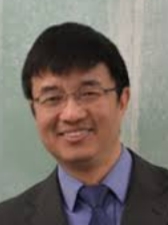 |
Shaomin Wu, Kent Business School, University of Kent, UK |
| Dr. Shaomin Wu is Professor of Business/Applied Statistics at Kent Business School, University of Kent, UK. His research interests include Machine Learning, Reliability Mathematics, and Applied Stochastic Processes. Shaomin has secured research funding from prestigious UK funding bodies. He has been a member of the editorial boards of many journals. He has co-chaired five international conferences on reliability and served on scientific committees for over 30 international conferences. He is also a regular keynote speaker at many international conferences. He has published over 100 papers in SCI-indexed academic journals. He has served as an external examiner for more than 20 PhD theses across seven countries: Australia, France, Hong Kong, Norway, Oman, Singapore, and UK. Title: Explaining the relationships in recurrent event data analysis Abstract: This presentation introduces a novel explainable temporal point process (TPP) model, Stratified Hawkes Point Process (SHPP), for modelling recurrent event data (RED). Unlike existing approaches that treat temporal influence as a black box or rely on post-hoc explanations, SHPP structurally decomposes event intensities into semantically meaningful components for describing self-, Markovian, and joint influences. This decomposition enables direct quantification of how past events contribute to future event risks, termed as influence values. We further provide a sufficient condition for mean-square stability based on kernel decay, ensuring long-term boundedness of intensities and realistic behavioural predictions. Experiments and an e-commerce case study demonstrate SHPP's ability to deliver accurate, interpretable, and stable modelling of complex event-driven systems. |
|